
Hope yours are merry and bright.
Quotes
-
Happy Holidays
-
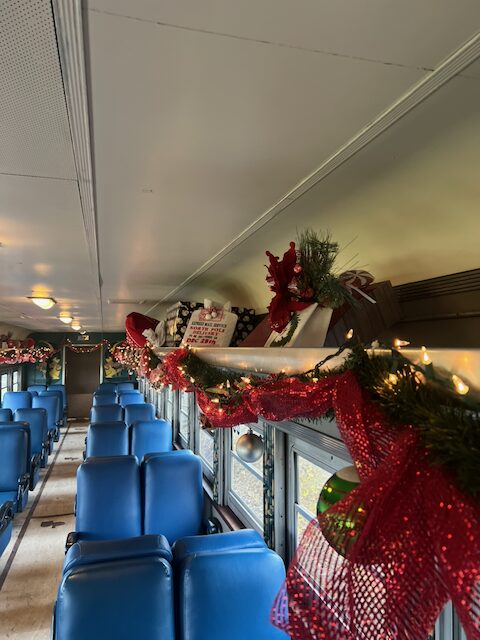
After the Last Santa Train: What Happens Next?
The platform lights are dark. The last families have driven home with sleepy kids clutching candy canes. Somewhere in a cold shop building, a locomotive is cooling down for the first time in weeks.
It’s the moment every heritage railroad works toward all year. And the moment that can break an organization if they’re not careful.
The Quiet That Nobody Talks About
Holiday trains are the lifeblood of most tourist railroads. For many operations, those six weeks between Thanksgiving and Christmas represent 40 to 60 percent of annual revenue. The North Pole Limited. The Polar Express. Santa’s Lighted Forest. Whatever you call yours, it kept the lights on.
But here’s what the brochures don’t mention: the week after Christmas is when the real work begins.
Equipment that’s been running hard needs attention. Volunteers who pushed through double shifts need rest. And leadership needs to take an honest look at what worked, what didn’t, and what nearly went sideways.
Most organizations skip this step. They’re exhausted. They want to coast into January. That’s a mistake.
The 72-Hour Window
The best-run heritage railroads I’ve seen treat the first 72 hours after their last holiday departure like a structured debrief. Not a party. Not a collapse. A debrief.
Walk the equipment. Document everything while memories are fresh. That weird noise the coach made on December 20th? Write it down now or lose it forever. The volunteer who mentioned a near-miss with a passenger? Get that conversation on record before the holidays scatter everyone.
This isn’t about blame. It’s about building institutional memory. Heritage railroads lose knowledge constantly. Volunteers move. Key people pass away. The only defense is documentation, and the best time to document is while the season’s lessons are still raw.
The January Cliff
Here’s an uncomfortable truth: many heritage railroads lose 20 to 30 percent of their active volunteers between December and February.
Some of it is natural. Snowbirds head south. Schedules shift. But a big chunk of that loss is preventable burnout. Volunteers who gave everything during the holiday rush and got nothing back but another ask.
If your organization doesn’t have a plan for volunteer appreciation and rest in January, you’re spending down your most valuable asset.
This doesn’t require a big budget. A handwritten note from leadership. A small gathering in February when things calm down. Recognition in your newsletter that names specific people and specific contributions. The details matter less than the intention: showing your people that you noticed.
Money In, Money Out
Holiday revenue feels like a windfall. After months of scraping by, suddenly there’s cash in the account. The temptation is to immediately start spending on that project you’ve been putting off.
Slow down.
The organizations that thrive long-term treat January as a financial reckoning. How did actual revenue compare to projections? Where did costs creep higher than expected? What’s the real margin after you account for the overtime, the emergency repairs, the weather cancellations?
Get your board to look at these numbers in January, not March. The patterns are easier to see when the season is still fresh. And if something went wrong financially, you want to catch it before it becomes a habit.
Planning for Next Year Starts Now
I know. You just finished this year. The last thing you want to think about is next December.
But the decisions that shape your next holiday season are made in the first quarter. Will you add capacity? Change your ticketing system? Adjust pricing? Recruit for specific volunteer gaps?
The railroads that run the smoothest holiday operations aren’t working harder in November. They’re working smarter in January.
The Real Gift
Here’s what I keep coming back to: the holiday train season isn’t just about revenue. It’s about the families who’ll remember that ride for decades. The kids who’ll grow up and bring their own children back someday.
That magic doesn’t happen by accident. It happens because people like you do the unglamorous work in the off-season. The maintenance. The planning. The relationship-building.
So take a breath. You earned it. But don’t take too long.
The next Santa train is only 340 days away. -
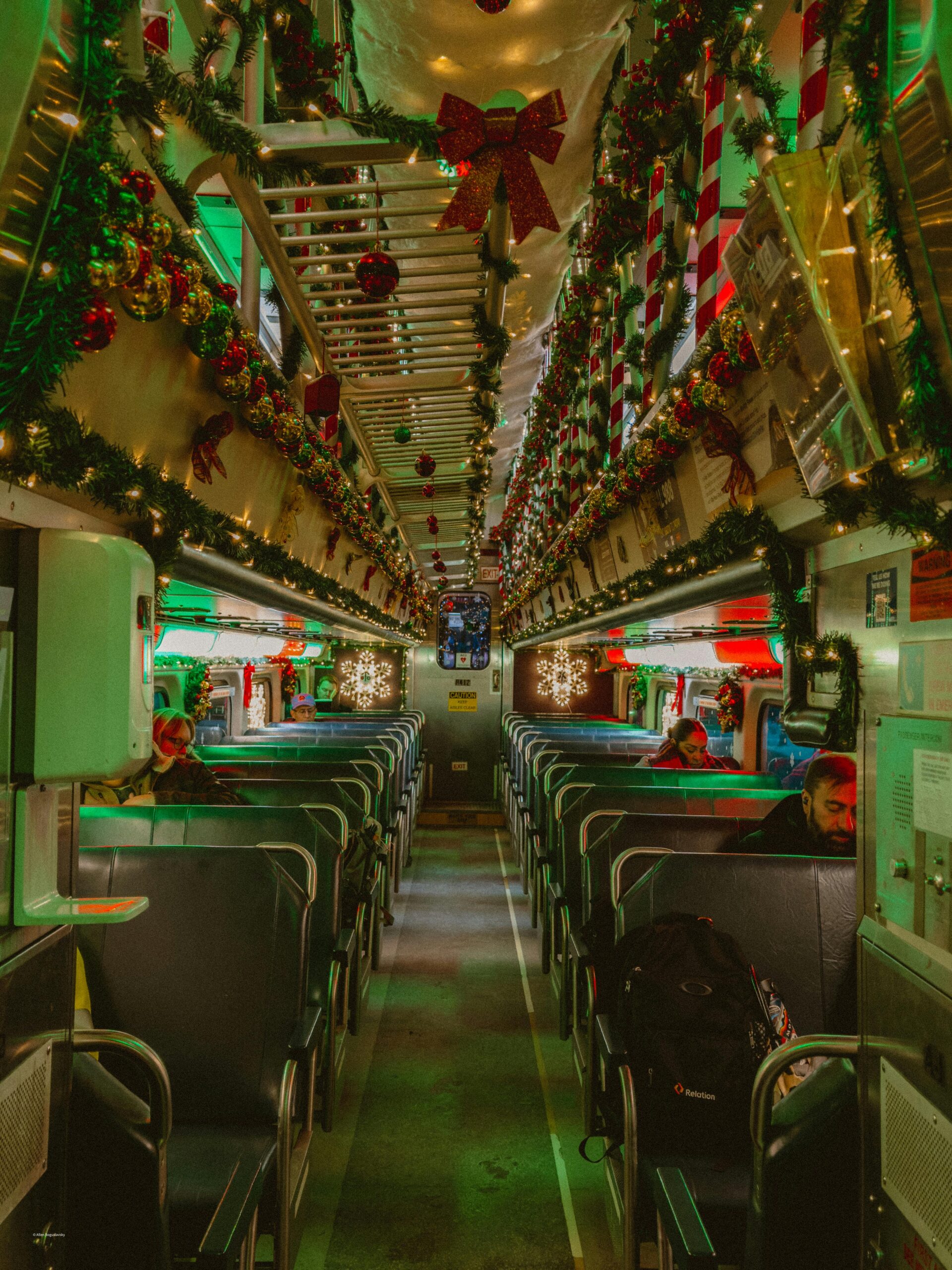
Beyond the Polar Express: How Heritage Railroads Are Reinventing Holiday Magic
The Polar Express is everywhere. With 1.8 million guests riding 58 partner railroads in 2024, it’s the 800-pound reindeer in the room for heritage rail.
But here’s what the franchise doesn’t tell you: some of the most creative, beloved holiday train experiences in America have nothing to do with that golden ticket.
And they’re thriving.
The Economics of Breaking Free
Running a Polar Express costs serious money. Rail Events Inc. charges a $10,000 annual fee plus 8-30% of ticket gross, with additional merchandise royalties up to 10%. For smaller heritage operations, that math gets painful fast.
So railroads got creative.
Cuyahoga Valley Scenic Railroad in Ohio ditched their long-running Polar Express for North Pole Adventure, an original production with nine uniquely themed cars. Mrs. Claus’ Kitchen. Candy Cane Lane. Inside the Tree. Each car is its own immersive world. No licensing fees. No franchise restrictions. Just 90 minutes of pure imagination rolling through a national park.
Verde Canyon Railroad near Sedona created The Magical Christmas Journey with their own storybook, their own characters, and a real bald eagle from Arizona’s Liberty Wildlife greeting kids at the depot. Children wear eagle wings and “fly” through miniature houses before arriving at a North Pole village complete with Reindeer Flight School and (my personal favorite) the Naughty Kids’ Coal Mine.
Tennessee Valley Railroad Museum’s North Pole Limited has been running independently since 1999. Twenty-five years of tradition, built without a franchise. The money they save on licensing? It goes right back into expanded programming.
Theatrical Excellence Sets the Bar
Essex Steam Train’s North Pole Express might be the gold standard. Over 70,000 riders in 2022. Professional performers dancing down the aisle of every car during live musical productions. Tickets sell out within days.
Blake Lively and Ryan Reynolds booked an entire car for their family. That’s the kind of reputation you build when you invest in quality over brand recognition.
Pennsylvania’s Strasburg Rail Road has offered Christmas trains for over 65 years. Their Night Before Christmas Train features dramatic readings in authentic Victorian coaches heated by real pot-bellied stoves. No movie tie-in needed when you have 19th-century atmosphere that franchise operations can only dream about.
Adults Want In Too
Here’s where it gets interesting for operators thinking about market segmentation.
Adults-only holiday trains are the fastest-growing segment in heritage rail. Wisconsin Great Northern adds Holiday Wine Train cars to their Santa runs. Black Hills Central Railroad’s 1880 Train offers “Spiked!” cars with craft beer tastings.
Tennessee Valley Railroad Museum gets it. Beyond their flagship North Pole Limited, they offer Christmas Tea, Christmas Dinner Train, Christmas Lunch Train, and Nightcap with St. Nick for the 21+ crowd. That’s five distinct products serving different audiences from the same equipment.
Murder mystery trains take it further. Florida’s Seminole Gulf Railway runs “Holiday Havoc,” a Christmas-themed whodunit with a five-course meal. Three and a half hours of noir intrigue crossing the Caloosahatchee River. Not exactly what Chris Van Allsburg had in mind, but it fills seats.
Why This Matters for Your Bottom Line
Holiday trains typically generate 40-60% of annual operating revenue for heritage railroads. That’s not a nice-to-have. That’s survival money.
The Great Smoky Mountains Railroad’s 2025 Polar Express season? Sold out. They’re already selling 2026 tickets. Demand isn’t the problem.
But here’s the thing: families return to Essex Steam Train and Verde Canyon and Tennessee Valley not because of a movie they saw once. They return because those experiences exist nowhere else. Original storytelling. Live entertainment. Local character.
You can’t replicate “professional carolers in a Victorian coach heated by a pot-bellied stove” with a licensing agreement.
The Takeaway
The Polar Express works. I’m not here to trash it. For many railroads, that franchise provides a proven template and built-in marketing.
But the heritage operations doing the most interesting work have figured out something important: your greatest competitive advantage is being irreplaceable.
Nevada Northern Railway in Ely lets you smell coal smoke and creosote while riding through sagebrush valleys in equipment from 1910. The Skunk Train takes you through redwood forests to see a decorated giant sequoia. Essex Steam Train turns every coach into a Broadway stage.
No franchise can deliver that. Only you can.
The families who ride your trains this December? They’re not comparing you to a movie. They’re building memories that will bring their own children back someday.
That’s worth more than any golden ticket.
-
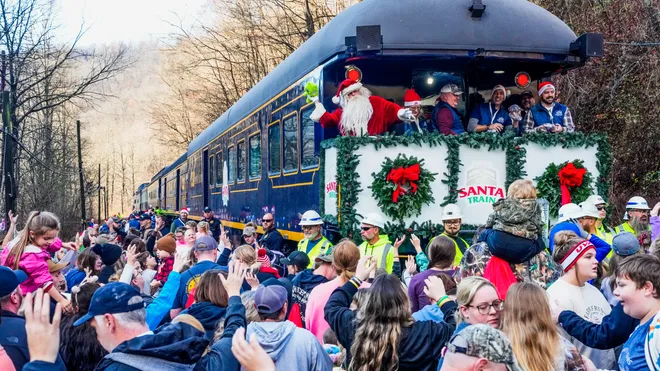
When the Rails Bring Hope Home
Every November, families in places like Dante, Virginia gather at railroad crossings before dawn, waiting in the cold. Kids strain to hear a distant whistle. Then it appears through the mist: a locomotive decorated with lights, loaded with 15 tons of toys, clothing, and hope.
That’s the CSX Santa Train. It’s been running for 83 years. And it’s not alone.
Across North America, railroad holiday trains have quietly become something remarkable. The CSX Santa Train and CPKC Holiday Train have collectively raised over $26 million and delivered millions of pounds of food and toys to communities that often get overlooked. These aren’t just corporate PR stunts. They’re living proof that the same rails that built small-town America still connect us.
The Santa Train started as a thank-you, not charity
In 1943, Kingsport, Tennessee businessmen wanted to thank the coal miners along the Clinchfield Railroad. Their families were fueling the war effort. The “Santa Claus Special” wasn’t meant as a handout. It was gratitude.
Joe Higgins was the first Santa. His wife hand-sewed a red corduroy suit with real fur. He went to “Santa School” in Pennsylvania. When he retired, John Dudney wore the suit for 38 consecutive years.
Today the train travels 110 miles from Shelby, Kentucky to Kingsport, making 14 stops through 29 communities. The role of Santa has changed hands only four times in 83 years. Charlotte Nickels, a retired teacher from Dungannon, Virginia, hasn’t missed seeing the train since its first run in 1943.
The CPKC Holiday Train feeds a continent
While the Santa Train serves Appalachia, the CPKC Holiday Train reaches across two countries. It started in 1999 when Canadian Pacific asked employees what charitable cause mattered most. The answer was hunger.
Now two trains run simultaneously through Canada and the U.S., visiting nearly 200 communities across seven provinces and thirteen states. They’ve raised more than $26 million and collected 5.4 million pounds of food. In 2023 alone: $1.8 million and 160,000 pounds.
What makes it distinctive is the concert stage. A modified boxcar opens to reveal a platform where artists like Sheryl Crow, the Barenaked Ladies, and KT Tunstall perform free shows. Every donation stays in that community.
There’s an entire ecosystem of these trains
Operation Toy Train has collected over 380,000 toys across the Northeast over 17 years. The Indiana Rail Road Santa Train has distributed free winter coats since 1989. Caltrain’s Holiday Train draws 35,000 people annually to Silicon Valley with 75,000 lights and Toys for Tots donations. The Cameron Christmas Train launched in November 2024 as a partnership between Cameron Health, the Indiana Northeastern Railroad, and the Fort Wayne Railroad Historical Society.
Heritage railroads have gotten in on it too. The Steam Railroading Institute runs Pere Marquette 1225, the actual locomotive that inspired The Polar Express. Author Chris Van Allsburg played on it as a kid. The Cuyahoga Valley Scenic Railroad donates $5 from every ticket to the Greater Cleveland Food Bank.
Why this matters beyond the gifts
Railroads literally built rural America. Where they installed water towers and cattle pens, general stores followed, then churches and schools. Entire communities sprouted along the tracks.
That’s why holiday trains carry such weight in places where isolation is still real. When a decorated train rolls through, it says: you haven’t been forgotten.
Former CSX CEO Joe Hinrichs put it plainly: “This really embodies our history. Coal is still important, but it’s declined over time. Now it’s about making sure these communities don’t get lost.”
Jessica Laws from Dante, Virginia is more direct: “It’s tradition. Got to do it. If you’re from here, this is part of the year.”
What stays with you
Angie Hensley grew up in St. Paul, Virginia watching the Santa Train pass. “It was such a thrill when we heard that whistle blow. My dream was to ride that train. Never in my life did I ever think I would get to.”
In 2024, after she and her husband volunteered during Hurricane Helene recovery, they were invited to ride. A lifetime of waiting, fulfilled.
That’s what these trains do. They arrive, and communities gather. Not through screens. In person, in the cold, at crossings.
The same infrastructure that carries freight was built through these communities. When a decorated train returns bearing gifts, it acknowledges that connection. Corporate success and community wellbeing have always been intertwined.
The trains keep coming. The communities keep gathering. Because the whistle still calls us home.
See you trackside.
Sources:
CSX Santa Train
- Trains Magazine: CSX sets date for the 82nd edition of the Santa Train
- Clinchfield Railroad Historical Society: CSX Santa Train
- WJHL: 80 Years In: History of the Santa Train
- Times News: The story of Joe Higgins, the Santa Train’s first Santa
- Visit Kingsport: All Aboard! The Santa Train returns for year 83
- WESH: Santa Train brings 82 years of holiday joy to Appalachia
- Courthouse News Service: Santa’s annual train visit delivers hope and magic to one corner of coal country
- CSX: Santa Train 2024
CPKC Holiday Train
- CPKC: Holiday Train
- CPKC: Holiday Train FAQs
- Vancouver’s Best Places: CPKC Holiday Train in Vancouver
- To Do Canada: Canadian Pacific Kansas City Holiday Train British Columbia 2025 Schedule
- Castanet: CP Holiday Train brings in $40K in donations, 3,000 pounds of food
- Maple Ridge News: Donations to CPKC Holiday Train to help food bank
- WABI: CPKC Holiday Train returns, spreading cheer and community support
Operation Toy Train
- Operation Toy Train Official Site
- Trains Magazine: Operation Toy Train sets record for toy donations
Indiana Rail Road Santa Train
Caltrain Holiday Train
- Caltrain: Holiday Train Making Stops Along the Peninsula
- Silicon Valley Community Foundation: Holiday Train
Cameron Christmas Train
- Trains Magazine: Cameron Christmas Train returns to Ohio, Indiana, Michigan
- Indiana Rail Experience: Cameron Christmas Train
Pere Marquette 1225 / Heritage Railroads
- Wikipedia: Pere Marquette 1225
- Cuyahoga Valley Scenic Railroad: North Pole Adventure
- Tennessee Valley Railroad Museum: North Pole Limited
Background / Rural Communities
-
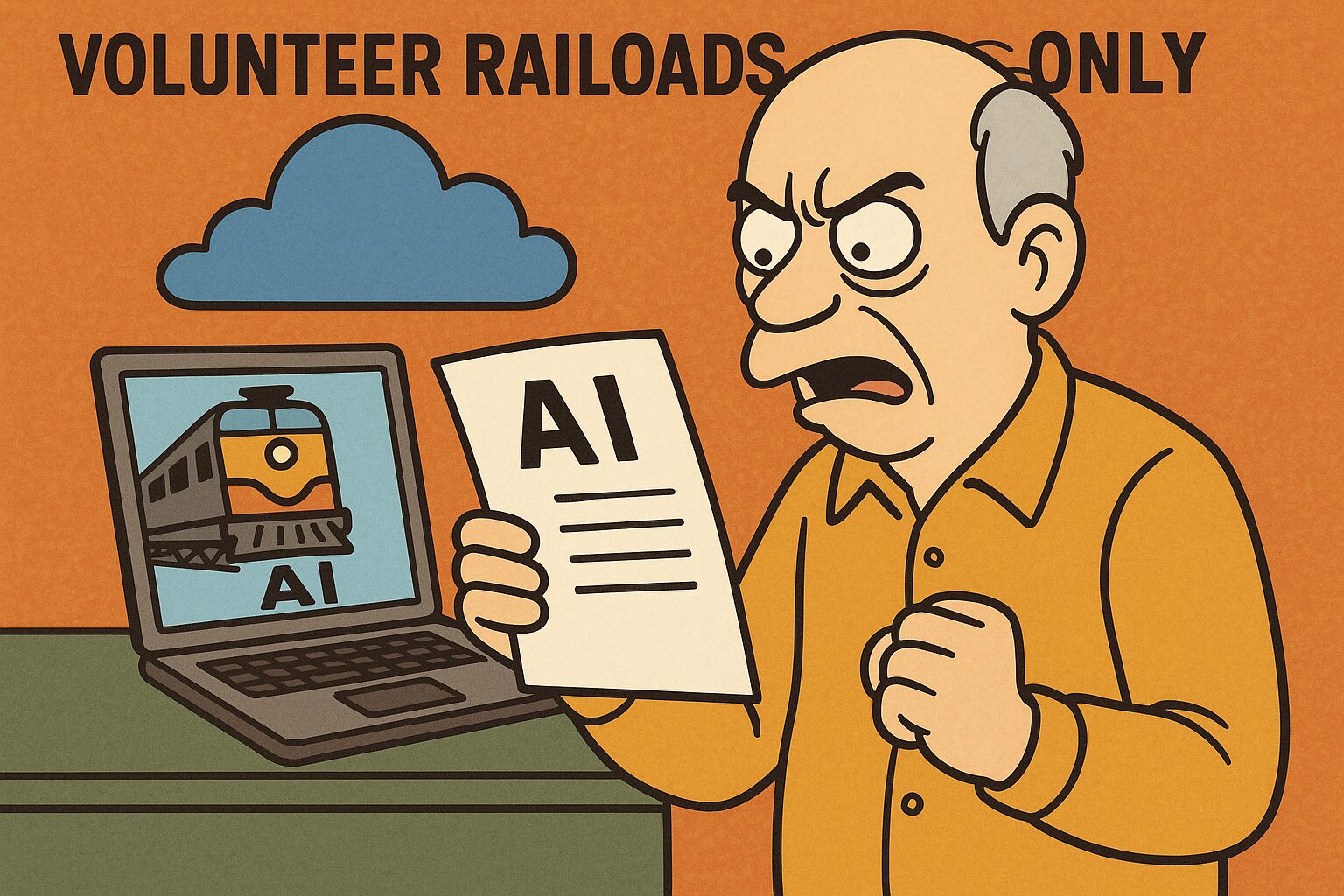
The AI Joke That Backfired: What Heritage Organizations Need to Know About Tech and Trust
I cracked a joke in an email to a longtime volunteer. It bombed. Badly.
The volunteer had asked for their hours tally with some peculiar grammar in their email. I pulled the data, sent it over, and added what I thought was a playful line: “I also had AI compose this email to you ;-).”
The reply came back polite but pointed: “I have no idea what you mean, perhaps my writing style is a joke to you.”
Oof.
I responded immediately with a genuine apology, explaining my intent wasn’t to diminish their value but to make light of the mundane data work. But the damage was done, and the lesson was clear: in preservation work, where volunteers are the lifeblood and respect is currency, even offhand tech references can land like insults.
This wasn’t just about my poor word choice. It revealed something bigger about how AI language intersects with heritage work, volunteer culture, and organizational trust. Here’s what I learned, what the research shows, and what we can all take away.
Why This Hit Different
Volunteers in preservation organizations aren’t just logging hours. They’re memory-keepers, storytellers, and the connective tissue between past and present. When you work with dusty rail cars, locomotives, and artifacts that require hands-on expertise, there’s an inherent tension when digital tools enter the picture.
My joke about AI “composing the email” of the volunteer’s hours accidentally suggested their contribution was reducible to a data point. What I meant as “hey, I ai too” read as “a robot could do what you do.”
In heritage work, that’s not just tone-deaf. It’s existential. These volunteers have specialized knowledge that no algorithm possesses. They can identify a brake valve by touch or explain why a particular restoration technique matters for historical accuracy.
When you joke that AI handled their requests, you’re unintentionally saying: “Your work is fungible. Your expertise is optional.”
No wonder it stung.
What the Research Reveals
This experience sent me down a research rabbit hole. Turns out, nonprofits and heritage organizations are wrestling with AI adoption in ways that amplify these tensions:
Resource and readiness gaps are real. Most nonprofits lack the infrastructure, funding, and strategic clarity to implement AI effectively. A 2024 study by the Center for Effective Philanthropy found only 11% of funders provide support for nonprofits to adopt AI tools. We’re expected to modernize without the means to do it thoughtfully.
Transparency matters enormously to stakeholders. A donor sentiment study surveying 1,006 people found that 86% said transparency around AI use is very or somewhat important. While 82% were familiar with AI and 48% saw fraud detection as a benefit, the message was clear: tell us what you’re doing with these tools.
Adoption is happening fast, but governance lags behind. A UK study of grassroots nonprofits found 78% were already using generative AI tools by mid-2024. However, they flagged major concerns about readiness, oversight, and ethics. We’re implementing before we’re prepared.
Heritage work faces unique ethical challenges. In the cultural sector, AI is being used to digitize manuscripts, reconstruct artifacts, translate endangered languages, and create digital twins of monuments. But these applications raise critical questions: Who owns the digital twin? Who decides what gets preserved or prioritized? Whose voices are centered or erased?
The bottom line: AI has genuine promise for efficiency and capability. But in mission-driven, community-centered work like ours, the “how” and the “who” matter as much as the “what.”
Five Takeaways for Heritage and Preservation Work
Let me get practical. Here’s what my email mishap and the broader research landscape taught me about using AI responsibly in heritage organizations:
1. Position tech as supporting humans, not replacing them
Your volunteers aren’t interchangeable parts. They’re the reason your organization exists. When you mention AI or automation, frame it clearly: “This tool helps me with the administrative grunt work so I have more time to work alongside you, hear your stories, and support the hands-on preservation you do.”
Never let technology language accidentally erase the human contribution. Make the hierarchy explicit: people first, tools second.
2. Be radically transparent about what AI does
If you’re using AI for donor segmentation, volunteer scheduling, or data analysis, say so. Explain what the tool does, what it doesn’t do, and how you maintain oversight.
This isn’t just good practice. It’s what your stakeholders want. Research shows that transparency builds trust, while opacity breeds suspicion. When people understand your tools serve them rather than surveil them, they’re far more receptive.
3. Don’t confuse efficiency with relationship
Yes, 71% of nonprofits using generative AI cite efficiency as the primary benefit. But if you automate everything, you lose what makes preservation work meaningful: personal recognition, authentic relationships, hands-on collaboration, and the stories that can’t be captured in a database.
My joke misfired because it inadvertently suggested efficiency mattered more than the person. In heritage work, that’s exactly backward. The inefficient parts (the conversations, the shared work, the mutual respect) are often the most valuable.
4. Build governance before you build systems
Before implementing AI for volunteer tracking, donor outreach, or collection management, ask hard questions:
- Is our data quality good enough to avoid biased outputs?
- Have we considered how volunteers will perceive this?
- What are the ethical implications of using personal data this way?
- Who makes decisions about what gets automated and what stays human?
Heritage organizations steward more than objects. We steward stories, relationships, and community trust. Even small tech decisions have legacy consequences. A digital catalog that erases a marginalized community’s contribution isn’t just bad data. It’s bad history.
5. Craft your messaging with care
This is where I failed. A throwaway line about “AI composing” the email landed as dismissive because I didn’t consider my audience: long-tenured volunteers in a preservation field where hands-on expertise and legacy matter deeply.
When you discuss AI with your community, try language like: “I’m using a tool that handles the spreadsheet work so I can focus on what matters, supporting you and the preservation work we do together. The tool serves us, not the other way around.”
Align the technology with service and respect. Make clear that automation exists to honor human contribution, not minimize it.
The Bottom Line
I’m grateful for this stumble. That careless line about AI taught me how powerful (and sometimes invisible) our tech language can be, even in a small railroad historical society.
We’re people. We’re memory-keepers. We’re community. Yes, we can and should use cutting-edge tools (AI, donor databases, digitized archives) to make our work more effective. But only if those tools genuinely serve the people doing the heavy lifting.
If your nonprofit, heritage group, or preservation organization is exploring AI, go ahead. But do it with humility, transparency, and deep respect for the volunteers, staff, and community members who make your mission possible.
Because the day your AI joke lands better than your heartfelt “thank you for giving 350 hours this year,” you’ve got things backward. And trust me, I learned that lesson the hard way.
-
Small Things Matter
Small things have a way of snowballing. And the time we had to find a new embroidery vendor? Easily top five.
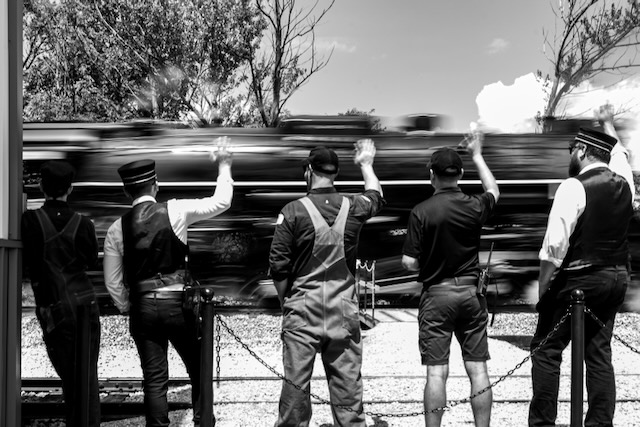
It started simple enough: black polos, crew shirts. Car host uniforms. Logo over the heart. All matching, all stitched with pride. Clean. Professional. Not covered in coal dust for at least ten minutes. Then our embroiderer dropped a red signal and died.
At first, I brushed it off. We’ve got bigger problems, right? Schedules to finalize. Safety meetings, budgets, broken coaches. Shirts could wait.
Except they didn’t.
Cue the emails.
“Who do I take this shirt to?”
“I called the number in the book and no one answered.”
What started as a minor errand turned into a low-grade emergency. Because while it felt small to me, it wasn’t small to the volunteers. For them, that shirt means something. It’s the badge. The uniform. The visible proof that they’re part of this crazy, wonderful machine we all work so hard to keep running.
And they’re right. That logo on the chest is as important to some as the coal is to the engine. It’s what keeps the fire lit. It’s pride made wearable.
Meanwhile, I’m still juggling Christmas train questions and reading a volunteer’s email that just says, “Received in the mail today,” with nothing else attached or written. Technically accurate, but about as descriptive as “train go.” I respect the mystery.
Eventually, the shirts will arrive. The logos will be stitched. And we’ll look sharp for maybe six minutes, until a kid with a candy cane weaponizes a hug.
If this has taught me anything, it’s that what seems small to me might be big to someone else. The little things are often the ones that matter most, and when we let them sit too long, they have a way of slipping through the cracks. Sometimes keeping the fire burning means remembering the small stuff before it’s forgotten, ignored, or left to die.
-
We Don’t Have The Talent Pool We Had Ten Years Ago
There was a time when the shop floor practically trained itself. Teenagers showed up already comfortable around tools. Farm kids could troubleshoot a leaky injector or burn in a decent bead and nobody blinked. Lately, we’re seeing the edges fray. The trains still run. The crowds are there. But the bench behind the veterans is thin, and it shows up in a hundred little ways.
Here are a few snapshots from our own world that say it out loud.
Scene 1: “I need people to drill holes and fab on Saturday”
Right after a strong steam weekend, we put out an email asking folks to pull one more shift and then flagged a shop blitz day. The ask was simple. Drill holes. Clean up. Light fabrication. The kind of tasks that used to get snapped up by the first five people through the door. We got help, but the signal was clear. Operations are healthy. The pipeline for hands-on restoration is not.
Scene 2: The career center visit
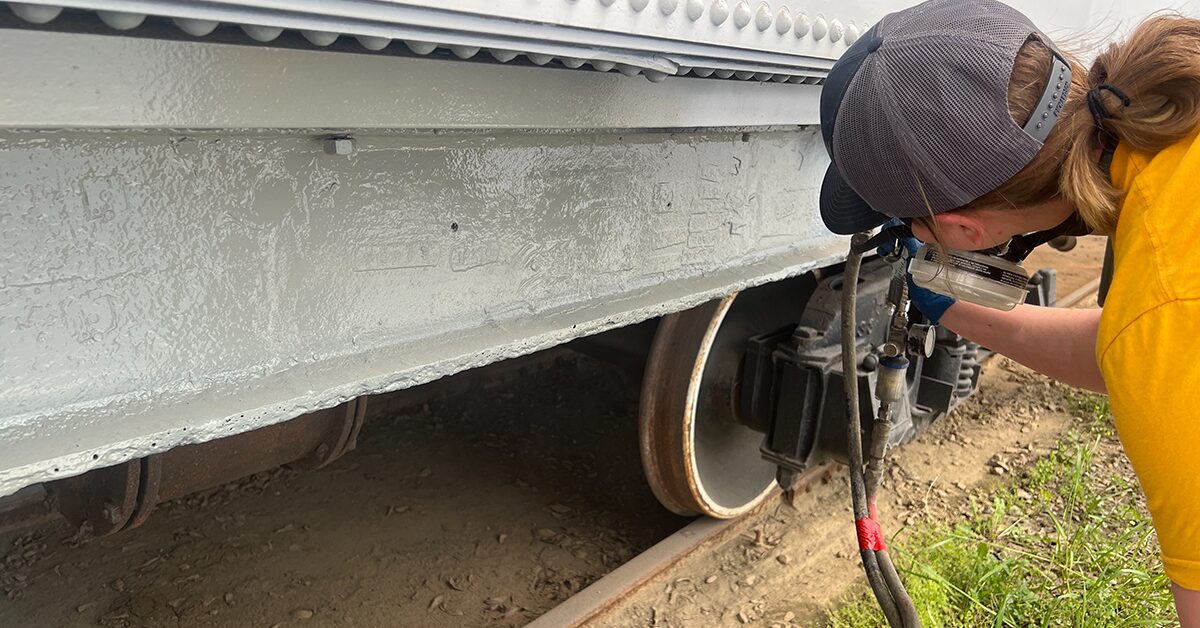
We lined up a visit from a local career and technical school. Splitting a group of juniors and seniors between shop stations. Real projects on real equipment. Less “museum tour” and more “this is the PPE, this is how you measure, this is how you fix.” That was intentional. If we want kids to show up with baseline skills, we need to be the place that gives them a start. Meet them halfway. Put the wrench in their hand. Make it safe, structured, and fun. Then invite them back.
Scene 3: The hard email nobody wants to write
Inside a planning thread, someone put it plain. We are developing a bigger gap than ever in volunteers with the skilled trades needed when they walk in the door. “We do not have the talent pool we had ten years ago.” That line stuck with me. It was not a complaint. It was a diagnosis. You can feel it in how long projects linger, how often we reshuffle people, how thin we stretch the same three names when a boiler task or a precision fit-up appears.
Scene 4: Great weekends still take a toll
We had a weekend that felt like the railroad should. Happy riders. Strong crew. Clean operations. Then the follow-up ask for more shop help came immediately. Wins in operations do not automatically feed wins in restoration. If anything, they highlight how critical the shop pipeline is. You can sell every seat on the train. If you cannot maintain and rebuild what you run, you are just burning good will on borrowed time.
So what do we do about it
I do not buy the story that young people do not care about the skills needed to do the work. I do think we made it harder for them to get near the work. Liability. Complexity. Gatekeeping. Schedules that assume everyone is retired. A wall of jargon that makes smart people feel like they do not belong yet. That is on us.
Here is the playbook we are leaning into. None of this is theoretical. It is the stuff we are already doing or about to do.
- Apprenticeships in the shop and on the road. Think eight to twelve weeks. One night a week. One Saturday a month. Paired with a mentor. Clear outcomes. “By week 4 you will safely needle-scale a truck.” “By week 8 you will measure and fit a bushing.” Badges and a simple logbook so progress is visible. Pass it, get invited to the next tier.
- Task ladders instead of mystery doorsPost the actual ladders. Car host to Passenger Services Manager. Apprentice welder to certified shop hand. Engine crew to fireman. Spell out the training, the tests, and the timeline. If people can see the steps, they climb them.
- Trade-school partnerships that are real More shop days with high school programs. Invite instructors to co-design modules. “Intro to precision measurement” in a railroad context is still precision measurement. Same with electrical troubleshooting, rigging, HVAC, and paint. We get fresh eyes and energy. They get real industrial context and a reason to care.
- Mentor the mentors Most of the knowledge lives in a handful of people who have earned the right to be picky. We can make their lives easier. Give mentors a simple teaching toolkit. Safety brief scripts. One-page procedures. The goal is not to dumb down the craft. The goal is to make it teachable without draining the mentor dry.
- Earlier wins for new hands Not everyone starts by rolling tubes or rewiring a diesel. Give people early, visible wins that still matter. Fabricate a set of grab irons. Restore and wire a marker lamp correctly. Rebuild a seat frame. Replace vestibule tread. Patch and paint a coach end. These tasks build confidence and lighten the backlog.
- Schedule like people have jobs and kids More evening slots. More predictable Saturdays. Less “maybe we will be there, maybe not.” Put it on a calendar. Make it stick. Communicate like professionals.
- Tell the story of the shop with the same energy as the excursions Riders love the sound and the smoke. They also love the people who make that possible. Short posts that show a fixture you made. A jig you designed. A broken thing made right again. Invite comments. Invite questions. Then invite them to class.
What success looks like
In a year, we should be able to point to a handful of people who can do the basics without babysitting. In two years, a handful who can lead a task. In three years, a few who can teach what they learned to the next batch. The veterans are still the backbone, but the weight feels lighter because more shoulders are under it.
I am not nostalgic for some golden age. I am practical. The railroad runs or it does not. If we want to keep the steam hot and the diesels honest, we have to build the pipeline on purpose. One class. One mentor. One Saturday. Repeat.
If this resonates, say something below. Tell me what worked at your shop. Tell me where you got stuck. If you are a young person who wants in, tell me what night you are free. I will meet you at the shop and hand you a wrench.